Automation Solutions for Automotive Industry Driving the Future
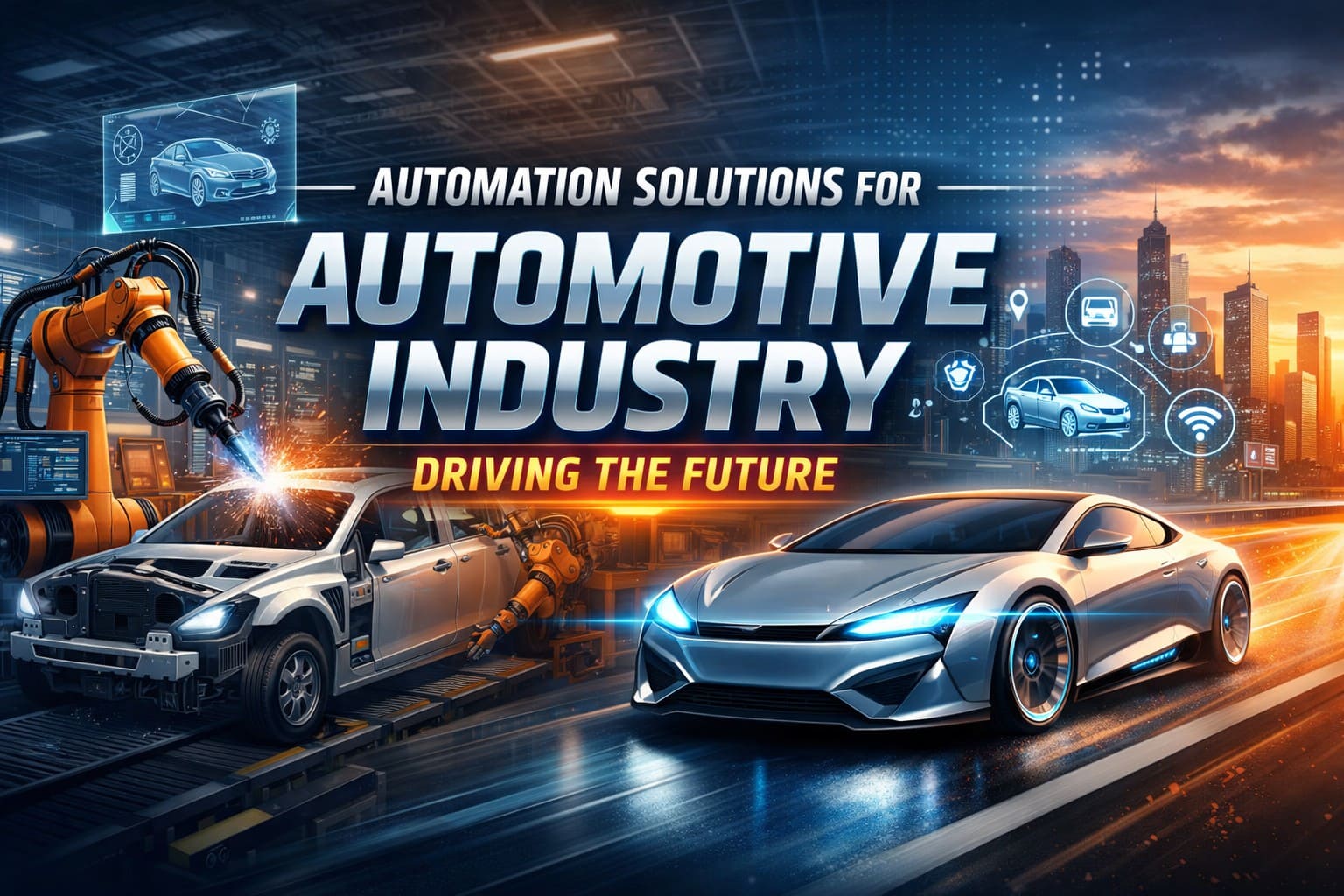
The automotive sector is undergoing a massive technological transformation. Manufacturers around the globe are adopting automation solutions for automotive industry processes to increase production efficiency, reduce costs, and improve quality standards. From robotic assembly lines to AI-powered predictive maintenance, automation has become the backbone of modern vehicle manufacturing.
Today’s automotive plants are no longer just factories—they’re smart manufacturing ecosystems where machines communicate, analyze data, and make decisions. According to the International Federation of Robotics, the automotive industry remains one of the largest users of industrial robots worldwide.
As competition intensifies and customer expectations grow, automation isn't just helpful—it's essential. In this comprehensive guide, we’ll explore 15 powerful automation innovations that are reshaping automotive production and driving the future of mobility.
Introduction to Automation in the Automotive Industry
Automation has played a role in automotive manufacturing for decades. However, the pace of technological advancement has accelerated dramatically in recent years. Companies are adopting advanced automation solutions for automotive industry operations to remain competitive in a rapidly evolving market.
The introduction of robotics in assembly lines began in the 1960s, but today’s systems are far more sophisticated. Modern automation integrates artificial intelligence, industrial IoT, machine learning, and real-time analytics.
These technologies help manufacturers:
- Reduce production errors
- Increase production speed
- Lower operational costs
- Improve worker safety
- Maintain consistent product quality
In short, automation has become the driving force behind Industry 4.0 manufacturing.
What Are Automation Solutions in Automotive Manufacturing?
Automation solutions refer to technologies and systems designed to perform manufacturing tasks with minimal human intervention. These solutions combine robotics, software, sensors, and data analytics to streamline production processes.
Examples include:
- Robotic assembly systems
- Automated welding machines
- AI quality inspection systems
- Autonomous transport robots
- Smart production lines
When integrated effectively, these technologies create efficient, data-driven manufacturing environments.
Why Automotive Companies Are Investing in Automation
Automotive production involves thousands of components and complex assembly steps. Automation helps simplify these processes while maintaining precision.
Major benefits include:
- Faster production cycles
- Consistent product quality
- Reduced operational costs
- Better resource utilization
- Improved safety standards
As vehicle demand grows worldwide, companies increasingly rely on automation solutions for automotive industry production to scale operations efficiently.
15 Powerful Automation Solutions Transforming Automotive Manufacturing
The modern automotive factory is powered by a combination of robotics, artificial intelligence, and digital technologies. Let’s explore the most impactful automation solutions currently revolutionizing the industry.
Robotic Assembly Systems
Robotic assembly arms are the backbone of modern automotive plants. These robots perform repetitive tasks such as installing engines, doors, and dashboards with exceptional precision.
Benefits include:
- Faster production
- High accuracy
- Reduced human fatigue
- 24/7 operation capability
Manufacturers rely heavily on robotic systems to maintain consistency across thousands of vehicles.
Automated Quality Inspection
AI-powered vision systems now inspect vehicles with incredible accuracy. Cameras and sensors detect even the smallest defects in body panels, paint finishes, or mechanical components.
Advantages include:
- Faster inspection times
- Reduced human error
- Improved product quality
Autonomous Material Handling
Automated Guided Vehicles (AGVs) and Autonomous Mobile Robots (AMRs) transport components throughout manufacturing plants.
These smart robots:
- Move materials between workstations
- Reduce manual labor
- Improve logistics efficiency
Smart Conveyor Systems
Conveyor systems have evolved into intelligent networks that track and manage production flow.
Smart conveyors can:
- Automatically adjust speed
- Track component location
- Optimize assembly sequences
AI-Driven Predictive Maintenance
Predictive maintenance uses AI to detect equipment issues before they cause breakdowns.
Sensors monitor:
- Temperature
- Vibration
- Energy consumption
When anomalies appear, maintenance teams receive alerts. This reduces downtime and saves money.
Industrial IoT Integration
Industrial Internet of Things (IIoT) connects machines, sensors, and systems across the factory floor.
Benefits include:
- Real-time data monitoring
- Improved production planning
- Faster decision making
Automated Welding Systems
Welding is one of the most critical processes in automotive manufacturing.
Robotic welders provide:
- Consistent weld quality
- Increased speed
- Improved structural integrity
Painting and Coating Automation
Robotic painting systems ensure smooth and uniform coatings across vehicle surfaces.
Advantages include:
- Reduced paint waste
- Perfect finish quality
- Faster production cycles
Automated Packaging Systems
Once vehicles are completed, automated packaging systems handle parts storage and distribution efficiently.
Digital Twin Technology
Digital twins are virtual models of physical production systems.
Manufacturers use digital twins to:
- Simulate production lines
- Identify bottlenecks
- Improve factory design
These tools help optimize automation solutions for automotive industry manufacturing systems before real-world implementation.
Benefits of Automation Solutions for Automotive Industry
Automation is transforming automotive manufacturing in several significant ways. Let’s explore the key benefits.
Increased Manufacturing Efficiency
Automated systems work faster than manual labor and operate continuously. Production lines can run around the clock, dramatically increasing output.
For example:
|
Metric |
Manual Process |
Automated Process |
|
Production Speed |
Moderate |
High |
|
Error Rate |
Higher |
Lower |
|
Downtime |
Frequent |
Minimal |
Automation also reduces production bottlenecks by optimizing workflow between departments.
Improved Product Quality
Consistency is critical in vehicle manufacturing. Even small defects can lead to safety concerns or recalls.
Automation improves quality through:
- Precision robotics
- AI quality inspection
- Real-time monitoring
This ensures that every vehicle meets strict quality standards.
Workplace Safety Improvements
Manufacturing environments often involve heavy machinery and hazardous tasks.
Automation improves safety by:
- Handling dangerous tasks
- Reducing worker fatigue
- Minimizing accidents
Employees can focus on supervision, maintenance, and higher-skill activities instead of repetitive manual labor.
Challenges of Implementing Automation in Automotive Manufacturing
Despite its advantages, adopting automation isn't always simple. Companies must overcome several challenges when implementing automation solutions for automotive industry systems.
High Initial Investment
Automation equipment can require significant upfront investment. Robotic systems, sensors, and software platforms can be costly.
However, many companies recover these costs over time through:
- Increased productivity
- Lower labor costs
- Reduced waste
Workforce Skill Transformation
Automation changes workforce requirements. Employees must develop new technical skills to operate and maintain advanced systems.
This means companies must invest in:
- Training programs
- Technical education
- Workforce reskilling initiatives
Integration with Existing Systems
Older manufacturing plants may struggle to integrate modern automation technologies.
Challenges include:
- Compatibility with legacy systems
- Data synchronization issues
- Infrastructure upgrades
Careful planning is necessary to ensure smooth integration.
The Future of Automation in Automotive Industry
Automation will continue to evolve as technology advances. Emerging innovations promise to make manufacturing even smarter and more efficient.
AI-Powered Manufacturing
Artificial intelligence will play a larger role in production management.
Future systems may:
- Automatically adjust production schedules
- Detect inefficiencies instantly
- Optimize energy usage
Fully Autonomous Smart Factories
The next stage of industrial evolution is the fully autonomous factory.
These factories will feature:
- Self-optimizing production lines
- Autonomous logistics robots
- AI-driven supply chain systems
Sustainability Through Automation
Automation also supports environmentally responsible manufacturing.
Smart factories reduce:
- Energy consumption
- Material waste
- Emissions
This makes automation solutions for automotive industry sustainability initiatives increasingly valuable.
Frequently Asked Questions (FAQs)
1. What are automation solutions for the automotive industry?
Automation solutions refer to robotic systems, AI software, and smart manufacturing technologies that automate vehicle production processes.
2. Why is automation important in automotive manufacturing?
Automation increases productivity, improves quality, and reduces operational costs while enhancing workplace safety.
3. What technologies are used in automotive automation?
Common technologies include robotics, AI inspection systems, IoT sensors, predictive maintenance software, and digital twin simulations.
4. Do automation solutions replace human workers?
Not entirely. Automation reduces repetitive tasks but creates new opportunities for skilled technical roles.
5. How does automation improve vehicle quality?
Robotics and AI inspection systems maintain precise manufacturing standards and detect defects early.
6. What is the future of automation in the automotive industry?
The future includes AI-powered factories, autonomous production lines, and smart manufacturing ecosystems.
7. Are automation systems expensive to implement?
Yes, initial costs can be high, but long-term savings from efficiency and reduced errors typically justify the investment.
Conclusion
The automotive industry is undergoing a powerful transformation, fueled by advanced automation technologies that are redefining how vehicles are designed, manufactured, and delivered. From intelligent robotic assembly lines to AI-driven predictive maintenance, automation is enabling manufacturers to achieve unprecedented levels of efficiency, precision, and safety.
For forward-thinking companies, adopting automation is no longer optional—it is essential for staying competitive in a fast-evolving global market. While initial investments and workforce adaptation may present challenges, the long-term gains in productivity, quality, and operational resilience make automation a strategic imperative.
At Leaptech, we believe automation is more than just technology—it’s the foundation of the next generation of automotive manufacturing. By integrating smart robotics, AI-powered systems, and connected manufacturing solutions, Leaptech empowers automotive companies to streamline production, reduce downtime, and accelerate innovation.
As the industry continues to embrace artificial intelligence, IoT, and smart factories, businesses that partner with Leaptech today will be better equipped to lead tomorrow’s automotive revolution. Automation isn’t just shaping the future of manufacturing—it’s driving it forward with Leaptech at the helm.