Electronics Soldering Automation for Precision Output
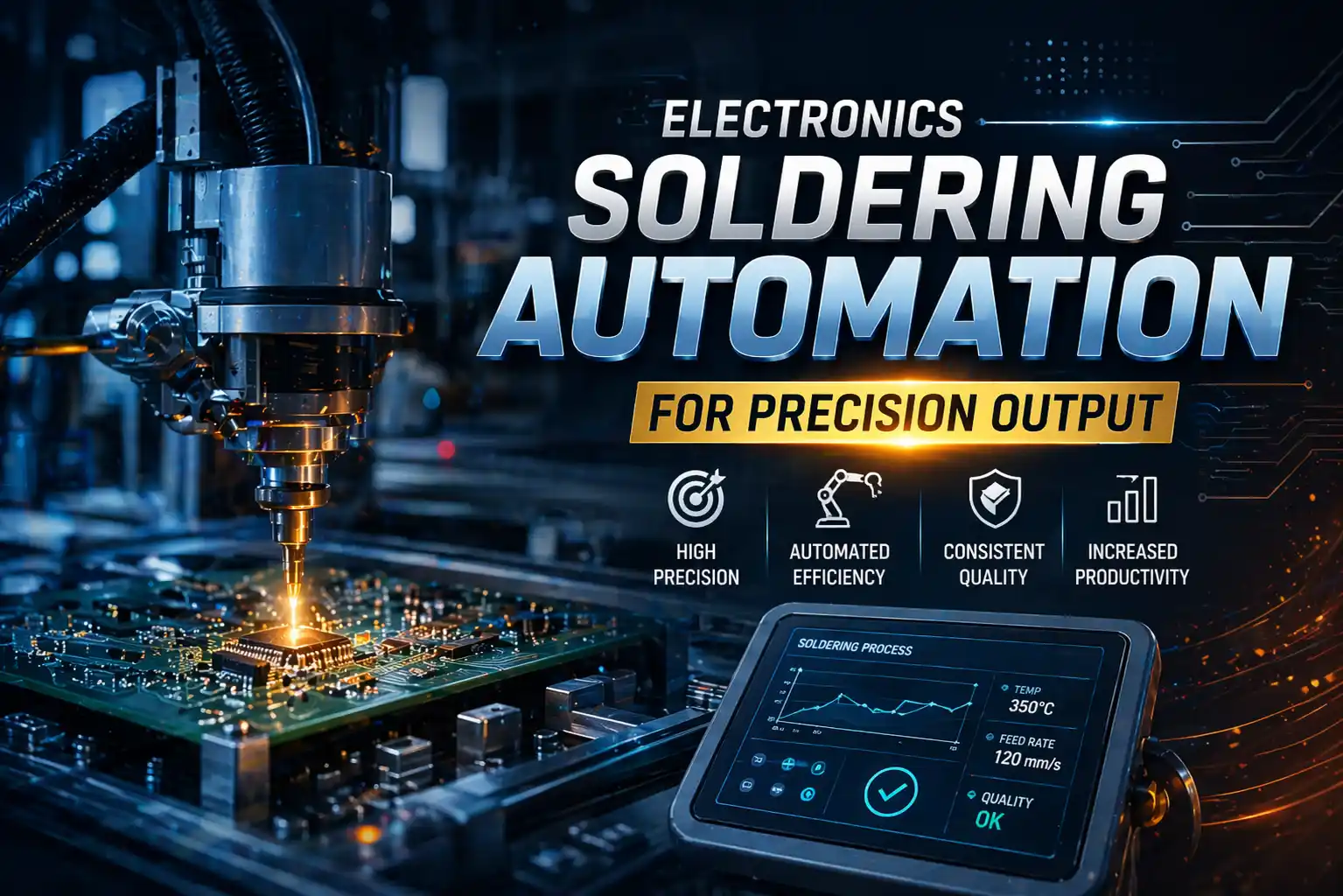
In today’s rapidly evolving electronics manufacturing landscape, precision, consistency, and scalability are no longer optional—they are fundamental to staying competitive. As electronic products become more compact and technologically advanced, traditional soldering methods are increasingly unable to meet the required standards of quality and efficiency. This shift has led manufacturers to adopt Electronics Soldering Automation as a core part of their production strategy.
Companies like Leaptech Corporation are at the forefront of this transformation, enabling manufacturers to move from manual, operator-dependent processes to intelligent, automated systems. By integrating automatic soldering machines into production lines, they help businesses not only improve output but also achieve global manufacturing benchmarks with confidence.
Understanding Electronics Soldering Automation
To understand the true value of Electronics Soldering Automation, it is important to look beyond the machinery and focus on the transformation it brings to manufacturing processes.
- Automation replaces variability with consistency
In manual soldering, even experienced operators can produce slight inconsistencies due to fatigue or environmental factors. Automation eliminates this variability by executing pre-programmed instructions with precision, ensuring that every solder joint meets the same high standard across the entire production batch. - Precision control enhances product reliability
Automated systems regulate temperature, solder flow, and positioning with extreme accuracy. This level of control significantly reduces the chances of weak or defective joints, which are often the root cause of product failures in electronics manufacturing. - Process standardization improves scalability
When soldering becomes automated, the process is no longer dependent on individual skill levels. This allows manufacturers to scale production without worrying about quality fluctuations, making it easier to meet increasing market demand.
Why Traditional Soldering Is Failing Modern Electronics Manufacturing
While manual soldering has served the industry for decades, its limitations become more apparent as production requirements grow more complex.
- Inconsistent quality impacts long-term reliability
Manual processes rely heavily on operator skill, which can vary from person to person and even from shift to shift. This inconsistency often leads to defects that may not be immediately visible but can cause failures over time. - Production speed limits business growth
Manual soldering is inherently slower, making it difficult for manufacturers to scale operations efficiently. As demand increases, relying solely on human labor can create bottlenecks that hinder growth. - High dependency on skilled labor increases risk
Training and retaining skilled operators is both time-consuming and costly. Additionally, any disruption in workforce availability can directly impact production timelines and output quality. - Operator fatigue introduces errors
Repetitive tasks can lead to fatigue, which increases the likelihood of mistakes. Even minor errors in soldering can result in significant rework costs or product failures.
These challenges make a strong case for adopting Electronics Soldering Automation as a long-term solution.
How Automatic Soldering Machines Transform Production
Automatic soldering machines are designed to bring together multiple technologies to create a seamless and highly efficient production process. Rather than operating in isolation, these systems function as part of a larger automated ecosystem where each stage of production is interconnected and optimized.
Precision Component Placement Sets the Foundation
In a typical electronics production line, the process begins with highly accurate component placement using advanced SMT pick-and-place machines. These systems ensure that even the smallest components are positioned with exact alignment on the PCB. This level of precision is critical because any misalignment at this stage can directly impact the quality of solder joints and overall product performance.
Controlled Solder Paste Application Ensures Consistency
Once components are positioned, stencil printing systems apply solder paste uniformly across the board. This step plays a crucial role in ensuring consistent solder volume and placement, which directly influences the strength and reliability of the final connections.
Advanced Soldering Technologies Create Reliable Connections
Reflow soldering ovens then use carefully controlled heat profiles to form strong and consistent solder joints across surface-mounted components. For more complex assemblies, wave soldering and selective soldering machines are used to handle through-hole components or specific areas of the PCB without affecting surrounding elements. This combination of technologies ensures flexibility and precision across different production requirements.
Integrated Inspection Systems Maintain Quality at Every Stage
To ensure that every unit meets strict quality standards, inspection systems such as Automatic Optical Inspection (AOI) and 3D Solder Paste Inspection (SPI) are integrated into the production line. These systems continuously monitor for defects, enabling real-time corrections. In advanced setups, X-ray inspection systems and in-circuit testing further enhance reliability by identifying hidden issues and verifying electrical performance.
Seamless Material Handling Enables Continuous Workflow
Supporting the entire process are PCB handling systems and conveyors that enable smooth movement of boards between stages. Additional systems such as PCB cleaning equipment and dispensing machines further refine the assembly, ensuring that the final product meets both functional and quality expectations.
System Integration Transforms Processes into a Unified Workflow
When all these technologies are integrated effectively, they create a synchronized production environment where each stage complements the next. With the support of experienced partners like Leaptech Corporation, manufacturers can implement these systems seamlessly into existing operations, achieving higher efficiency without disrupting ongoing production.
Key Benefits of Electronics Soldering Automation
Adopting Electronics Soldering Automation delivers measurable advantages across multiple aspects of manufacturing.
- Consistency that builds trust in product quality
Automated systems ensure that every solder joint is identical, which directly improves product reliability. This consistency is especially important for industries where performance and safety are critical. - Higher efficiency leading to increased output
Automation significantly reduces cycle times, allowing manufacturers to produce more units within the same timeframe. This increase in productivity helps businesses meet market demand without expanding resources. - Reduction in defects and rework costs
By minimizing human error, automated soldering reduces the occurrence of defects such as cold joints or excess solder. This leads to lower rework rates and better utilization of materials. - Long-term cost optimization
Although the initial investment may be high, the reduction in labor costs, material wastage, and quality issues results in substantial savings over time. - Scalability for future growth
Automated systems can handle increased production volumes without compromising quality, making them ideal for businesses planning to expand.
Industry Applications of Electronics Soldering Automation
The adoption of Electronics Soldering Automation is expanding rapidly across industries where precision, consistency, and long-term reliability are non-negotiable. As electronic components become smaller and more complex, the margin for error continues to shrink, making automated soldering not just beneficial, but essential.
Consumer Electronics: Enabling Precision in Miniaturized Designs
In the consumer electronics industry, the push toward miniaturization has significantly increased the complexity of assembly processes. Devices such as smartphones, wearables, and compact computing systems rely on extremely fine components that require highly controlled soldering conditions. Even the slightest variation in heat or solder application can affect performance. Automation addresses this challenge by ensuring that each connection is executed with micro-level precision, enabling manufacturers to maintain both quality and speed at scale.
Automotive Electronics: Ensuring Durability and Long-Term Reliability
The automotive sector presents a different but equally demanding set of requirements. Electronic components used in vehicles must operate reliably under extreme conditions, including temperature fluctuations, vibrations, and long operational lifespans. In such environments, the consistency of solder joints becomes critical. Automated soldering systems provide the level of repeatability needed to ensure that every component meets strict durability standards, reducing the risk of failure over time.
Medical Devices: Achieving Zero-Defect Manufacturing Standards
In medical device manufacturing, the expectations are even higher. Products used in diagnostics, monitoring, and treatment must adhere to stringent quality and safety standards. A single defect can have serious consequences, which makes precision and reliability absolutely essential. Electronics Soldering Automation enables manufacturers to maintain tight process control, ensuring that every unit produced meets the highest levels of accuracy and compliance.
Industrial Equipment: Enhancing Performance and Reducing Downtime
Industrial equipment manufacturing also benefits significantly from automation. Control systems, power electronics, and heavy-duty machinery rely on stable and durable electrical connections to function efficiently over long periods. Automated soldering enhances the strength and consistency of these connections, reducing maintenance needs and improving overall system performance.
Future Trends in Electronics Soldering Automation
The future of Electronics Soldering Automation is being shaped by advancements in smart manufacturing technologies.
- AI-driven systems enhance process optimization
Artificial intelligence enables machines to learn and adapt, improving efficiency and reducing errors over time. - Industry 4.0 enables real-time monitoring
Connected systems allow manufacturers to track performance, predict maintenance needs, and ensure uninterrupted operations. - Miniaturization increases demand for precision
As electronic components become smaller, the need for highly accurate soldering solutions continues to grow. - Sustainability drives innovation
Energy-efficient systems and reduced material wastage are becoming key priorities, aligning manufacturing processes with environmental goals.
Conclusion
Electronics Soldering Automation is redefining how modern manufacturing operates. By combining precision, efficiency, and scalability, it enables businesses to overcome the limitations of traditional soldering methods and achieve consistent, high-quality results. With the right strategy and the support of experienced partners like Leaptech Corporation, automation becomes more than just a technological upgrade, it becomes a foundation for long-term growth and competitive advantage.
FAQ’s
1. What is Electronics Soldering Automation used for?
It is used to automate soldering processes in electronics manufacturing, ensuring consistent quality, improved speed, and reduced dependency on manual labor while maintaining high precision.
2. How does an automatic soldering machine improve efficiency?
It streamlines the soldering process by reducing manual intervention, increasing production speed, and ensuring uniform results across all units, which significantly boosts overall productivity.
3. Is Electronics Soldering Automation suitable for small manufacturers?
Yes, smaller manufacturers can adopt compact or modular automation solutions that fit their production scale, allowing them to improve quality without large-scale investments.
4. What industries benefit the most from this technology?
Industries such as consumer electronics, automotive, medical devices, and industrial manufacturing benefit greatly due to their need for precision, reliability, and scalability.
5. What should companies consider before investing in automation?
They should evaluate production volume, product complexity, budget, and the expertise of the solution provider to ensure successful implementation and long-term returns.